

Views: 0 Author: Site Editor Publish Time: 2025-11-16 Origin: Site


Electric bikes are revolutionizing transportation, offering speed, power, and endurance in one package. But how far can a 750W electric bike really go on a single charge?
In this article, we’ll explore the factors that influence range, from motor power to terrain and rider weight. You’ll discover real-world examples and tips for maximizing your e-bike’s distance on each ride.
The battery is the most crucial part of any electric bike, directly impacting the bike’s range. In electric bikes, battery capacity is typically measured in Watt-hours (Wh), which indicates how much energy the battery can store. More energy storage means more distance.
For instance, an electric bike equipped with a 48V 15Ah battery (720Wh) can deliver moderate to long-distance rides. Meanwhile, a model with a 48V 20Ah battery (960Wh) provides even more range. These battery configurations can determine whether your 750W electric bike will cover 50 miles or fall short. When purchasing an e-bike, checking the battery capacity is essential. A larger battery with higher Wh allows for longer rides and is especially useful when tackling hilly terrain.
Explore how to select the ideal battery for your electric bike.
The 750W motor, which provides ample power, plays a significant role in overall performance. However, it’s not just the motor’s power that matters—it’s how efficiently the motor uses that power. A more efficient motor will convert the same amount of energy into more distance, reducing unnecessary power consumption.
For example, when riding on flat terrain, an efficient motor can help you travel farther with less battery usage. The 750W motor provides plenty of speed and power for climbing hills and accelerating, but if the motor is not energy-efficient, it will drain the battery faster. The key is balancing power and efficiency. If the motor uses too much power, it’ll reduce the overall distance you can travel, so selecting a bike with a highly efficient motor is a good choice for longer rides.
Most 750W electric bikes come equipped with Pedal Assist Systems (PAS), which adjust the motor’s power output based on how hard the rider pedals. PAS levels typically range from 1 to 5, and the higher the level, the more assistance the motor provides. Alternatively, a throttle system lets you control the motor’s power directly without pedaling.
Using a low PAS setting, or relying more on pedaling than the throttle, allows the rider to conserve battery power, increasing the range. For example, when using the throttle, the bike consumes more energy as the motor is working at full capacity. Conversely, using PAS can help moderate energy consumption, especially if you’re traveling on flat roads or in mild conditions. To make the most of your bike’s range, it’s best to reserve throttle use for steep climbs or rapid acceleration.
The terrain on which the e-bike is used has a huge impact on its range. Flat roads are less demanding, and this allows the motor to conserve more power and extend the distance. On the other hand, hills and rough terrain require the motor to work harder, consuming more energy.
For instance, an e-bike with a 750W motor might reach 50 miles on flat terrain, but on hilly or mountainous trails, the range could drop to 30 miles or less. Off-road conditions, such as gravel paths or sandy trails, introduce additional resistance, further reducing range. If your rides often include rough or hilly terrain, opting for a battery with higher capacity is a smart choice. With more battery power, the bike will be better equipped to handle these challenges without running out of energy quickly.
The weight of the rider and any cargo directly influences how efficiently the e-bike uses its power. Heavier loads require more energy for acceleration and speed maintenance, reducing the bike’s range.
For example, a 200-pound rider may notice a drop in range compared to a 150-pound rider, even if both riders follow the same riding pattern. Similarly, if you carry additional items like groceries, bags, or tools, this extra weight will also demand more from the motor, leading to reduced efficiency. To maximize the bike’s range, it’s important to keep the load as light as possible. A lighter rider and minimal cargo will ensure better performance, especially for longer trips.
| Rider Weight & Cargo | Typical Range |
|---|---|
| 170 lbs (77 kg), no cargo | 35-50 miles |
| 220 lbs (100 kg), with cargo | 25-40 miles |
| 150 lbs (68 kg), no cargo | 40-55 miles |
| 200 lbs (90 kg), with heavy cargo | 20-30 miles |
Riding speed significantly affects how long you can ride before the battery runs out. The faster you go, the more power the motor needs to overcome wind resistance. As a result, riding at high speeds will drain the battery more quickly than riding at a slower, steady pace.
For instance, maintaining a speed of 15 mph might give you a better range than speeding up to 20-28 mph, as the faster you ride, the more energy is required. It’s important to find a balance between speed and efficiency. Riding at moderate speeds not only conserves battery life but also ensures a more comfortable and stable ride. It’s best to reserve high speeds for short bursts when necessary, rather than maintaining them throughout the entire ride.
Weather can drastically impact your e-bike’s range. Strong headwinds require more effort to overcome, using more power and reducing range. Similarly, riding in extremely cold temperatures can cause the battery to perform less efficiently, which may result in a significant reduction in range by as much as 30%.
Lithium-ion batteries, which are commonly used in e-bikes, do not perform as well in cold weather. To help mitigate this, you can warm up your battery before riding, especially if you're heading out in low temperatures. On the other hand, riding with a tailwind can increase your range, as the wind resistance is lower, and the bike can glide more easily. Being mindful of the weather conditions, especially wind and temperature, will help you plan longer rides and maintain better range.
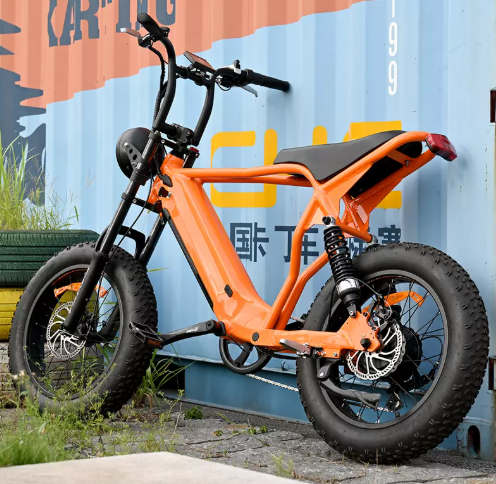
On average, a 750W electric bike can travel between 25-70 miles on a single charge, depending on the factors discussed earlier. For example, on flat roads, riders can expect a range at the higher end of the spectrum, while off-road riders or those riding on steep hills might see their range drop significantly.
Typical Range:
| Terrain Type | Typical Range |
|---|---|
| Flat terrain | 50-70 miles |
| Mixed terrain (hills, trails) | 30-50 miles |
| Hilly terrain | 25-40 miles |
Urban commuters tend to experience a range of 35-50 miles, especially when traveling on flat roads with moderate PAS use. Frequent stops and starts may reduce the range slightly, but riding on smooth surfaces helps conserve battery.
Off-road riders will likely see a reduced range of 20-35 miles, depending on how rough the trails are and how frequently they use the throttle or higher PAS levels.
Understanding your typical riding conditions will allow you to better estimate your electric bike’s range. If you primarily use your bike for commuting, you'll likely see better mileage compared to an off-road rider.
| Rider Type | Terrain Type | Estimated Range |
|---|---|---|
| Urban Commuter | Flat roads, city streets | 35-50 miles |
| Off-Road Rider | Rough trails, hills | 20-35 miles |
| Weekend Explorer | Mixed terrain (pavement & gravel) | 30-45 miles |
| Heavy Hauler | City roads with cargo | 25-40 miles |
To get the most out of your 750W electric bike, it’s important to ride efficiently. Smooth acceleration and braking will minimize energy spikes that drain the battery. Opt for lower PAS levels when possible, especially on flat or smooth roads. Throttle usage should be limited to steeper hills or situations where quick acceleration is necessary. This strategy will conserve battery life and extend your ride.
Proper battery care is essential for ensuring a longer-lasting and more efficient battery. Charge your battery regularly, but avoid letting it discharge completely. Storing your battery in a cool, dry environment prevents degradation caused by extreme temperatures. During the winter, you might want to warm the battery up before riding to improve its performance in the cold.
Keeping your bike well-maintained helps to improve range. Regularly check the tire pressure and ensure it is properly inflated, as under-inflated tires create more resistance, draining the battery faster. Lubricating your chain reduces friction, ensuring smooth pedaling and optimal motor performance.
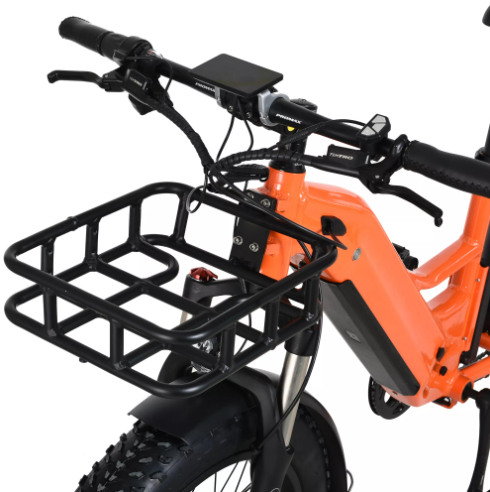
The voltage of the battery (V) and its capacity (Ah) play a key role in determining how far your 750W electric bike can go. Higher voltage systems, such as 52V, provide more torque and better acceleration. A higher voltage system will allow the motor to deliver more power, which is essential for tackling hills and off-road challenges. Larger battery capacities (Wh) allow for longer rides, especially in more demanding conditions.
A 750W motor offers a good balance between power and efficiency, providing enough torque for hill climbs, quick starts, and off-road riding. The motor allows riders to accelerate swiftly, but it does so without consuming the battery too rapidly. A 750W motor strikes an ideal balance for both city commuting and light off-roading.
| Battery Configuration | Voltage (V) | Capacity (Ah) | Estimated Range |
|---|---|---|---|
| 48V 15Ah (720Wh) | 48V | 15Ah | 25-40 miles |
| 48V 20Ah (960Wh) | 48V | 20Ah | 35-55 miles |
| 52V 17.5Ah (910Wh) | 52V | 17.5Ah | 35-50 miles |
Understanding the factors that affect your 750W electric bike’s range is key when selecting the right model. Key elements like battery capacity, terrain, and riding style play a role in estimating your bike’s range. Whether you are commuting, exploring trails, or carrying cargo, knowing how to maximize your range ensures you get the most out of every ride.
Zhejiang Eshion Technology Co.,Ltd offers advanced electric bike solutions with unique features that enhance performance and range. Their products provide exceptional value for those seeking durability, efficiency, and long-distance capabilities.
A: The range of a 750W electric bike depends on factors like battery capacity, terrain, and riding style. On average, it can go between 25 to 70 miles per charge.
A: Key factors include battery capacity, terrain, rider weight, riding speed, and motor efficiency. All these affect how far your electric bike can travel.
A: To maximize range, use lower PAS levels, maintain a steady speed, and avoid heavy cargo. Regularly maintain the bike to ensure optimal performance.
A: Riding on flat roads increases range, while hilly or rough terrain reduces it. More power is needed to tackle hills, decreasing the bike's overall distance.
A: Cold temperatures can reduce battery efficiency. To help mitigate this, warm up your battery before riding to maintain optimal performance.
A: Yes, a 750W electric bike can be suitable for long-distance rides, especially with a larger battery (higher Wh) and moderate terrain.


