

Views: 0 Author: Site Editor Publish Time: 2025-11-12 Origin: Site


Electric bikes (e-bikes) have become a popular choice for commuters in recent years. They offer a sustainable, eco-friendly alternative to traditional transportation. As cities get more crowded, choosing the right e-bike can make commuting easier and more efficient.
In this article, we’ll explore the differences between foldable and regular e-bikes. We’ll help you decide which option fits your commuting needs and lifestyle best.
One of the most significant differences between foldable e-bikes and regular e-bikes is portability. A foldable e-bike is designed specifically for ease of storage and convenience, making it the perfect choice for city dwellers or commuters with limited space. This type of bike can be folded into a compact size, allowing it to be stored conveniently in small spaces such as apartments, under desks at work, or in car trunks. For people who need to carry their bike on public transportation or require a portable solution for their daily commute, the foldable model stands out.
Regular e-bikes, however, are larger and built for greater durability and stability. This often means they require more storage space, such as a dedicated bike rack, garage, or outdoor storage area. While they may not be as portable as foldable e-bikes, they excel in terms of sturdiness and are more suitable for people who do not need to transport their bike regularly but need a more robust and stable ride.
When it comes to performance, regular e-bikes generally outperform foldable models. Regular e-bikes tend to feature more powerful motors, ranging from 500W to over 1000W. This allows them to reach higher speeds and handle steep inclines and rough terrain with ease. A rider looking for a reliable, fast bike that can handle long-distance rides and more challenging environments, such as hilly areas or uneven roads, will find the regular e-bike a better fit.
In contrast, foldable e-bikes are designed with smaller motors, usually between 250W and 500W. While they are more than capable of providing enough power for short, urban commutes, they are not built for speed or rough terrain. Their performance is optimized for flat roads and relatively short distances, making them an ideal choice for city commuting where higher speeds and more power are not necessary.
Durability is one of the key advantages of regular e-bikes. Their larger frames and robust construction provide a stable, comfortable ride, especially over longer distances and rougher terrains. The larger wheels and sturdy design allow for better shock absorption, making the ride smoother and more stable, even when encountering bumps or uneven surfaces.
Foldable e-bikes, while compact and practical, do not always provide the same level of stability and comfort. The smaller frames and wheels may lead to a less stable ride, particularly when traveling at higher speeds or over rough terrain. Although foldable e-bikes are ideal for short, urban commutes, they may not offer the same level of comfort on long, bumpy rides.
| Feature | Foldable E-Bike | Regular E-Bike |
|---|---|---|
| Portability | Easy to fold and store in small spaces. | Requires more storage space. |
| Speed | 15-20 mph | 20-28 mph |
| Power | 250W-500W | 500W-1000W+ |
| Frame | Compact and foldable. | Larger, more robust frame. |
| Storage | Can be stored in small areas (car trunk, under desk). | Needs dedicated bike racks or garage. |
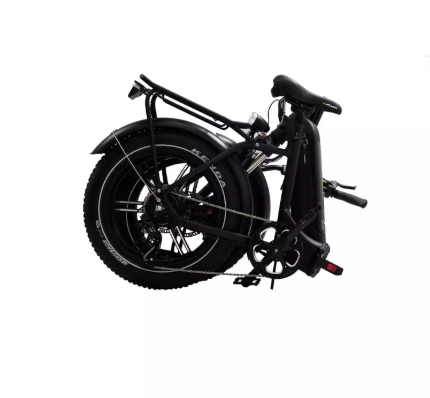
If you live in a small apartment or face significant storage challenges, a foldable e-bike offers the perfect solution. Its ability to fold into a compact size makes it easy to store indoors, whether under your desk at work, in your car trunk, or in a small closet. For city residents where parking space is limited, the foldable e-bike eliminates the need to park your bike outside, reducing the risk of theft and ensuring your bike is always within reach.
A foldable e-bike is a game-changer for commuters who rely on multiple modes of transportation. If your daily commute involves a combination of cycling and public transport—such as buses, trains, or trams—a foldable e-bike offers unmatched flexibility. You can fold it when hopping on a bus or train, then unfold it once you reach your destination. This flexibility makes foldable e-bikes the perfect companion for those who need to navigate busy urban transit systems.
Foldable e-bikes are ideal for short to medium-distance commutes, particularly in urban environments. Their compact size makes them easy to maneuver through crowded streets, and their lightweight design ensures they are convenient for quick, efficient trips. Whether you're heading to work, running errands, or visiting friends, a foldable e-bike offers a fast, flexible, and eco-friendly alternative to traditional transportation, especially in cities where traffic congestion is a daily issue.
For longer commutes, regular e-bikes are often the better choice. These bikes are equipped with larger batteries (up to 20Ah), providing a significantly greater range than foldable e-bikes. On average, a regular e-bike can travel between 60 and 100 miles on a single charge, making it perfect for commuters who need to cover long distances each day. With their powerful motors and long-lasting batteries, regular e-bikes ensure you won’t run out of power during your daily ride.
If your commute involves rough terrain, hills, or off-road paths, regular e-bikes are better suited for these conditions. Their larger wheels, stronger frames, and more powerful motors allow them to handle uneven surfaces and steep inclines with ease. Regular e-bikes are built for versatility, making them ideal for commuters who need a bike that can perform well across different types of terrain.
Regular e-bikes are designed for long-distance rides, offering more comfort and stability compared to foldable models. The larger frames and wheels ensure better balance and reduce the impact of bumps or obstacles along the way. Whether you're riding through the city or on longer, scenic routes, regular e-bikes provide a smoother, more comfortable ride over extended periods.
Motor size plays a critical role in determining how fast and efficiently an e-bike can operate. Regular e-bikes typically feature motors ranging from 500W to 1000W+, allowing for higher speeds and better performance on hills. Their larger batteries (up to 20Ah) provide a longer range, ensuring you can travel further without worrying about running out of power.
A foldable e-bike, on the other hand, is usually equipped with smaller motors (250W to 500W), making it ideal for urban commuting where speed is less of a priority. Their batteries typically offer a range of 30 to 50 miles, making them perfect for shorter commutes or runs around the city.
For a deeper dive into selecting the best battery for your ride, check out this detailed buyer’s guide.
Foldable e-bikes are designed for agility in urban environments. Their smaller size and lighter weight make them easy to handle in tight spaces and through crowded streets. They typically have a top speed of 15-20 mph, which is perfect for short city rides.
In contrast, regular e-bikes can reach speeds of 20-28 mph, making them better suited for longer, high-speed rides. The larger wheels and more powerful frames allow for smoother handling and better stability at higher speeds, making regular e-bikes the better choice for commuters who need to cover more distance at a faster pace.
| Feature | Foldable E-Bike | Regular E-Bike |
|---|---|---|
| Motor Size | 250W-500W | 500W-1000W+ |
| Battery Size | 36V-48V, 7.5Ah-10Ah | 48V-52V, up to 20Ah |
| Range | 30-50 miles | 60-100 miles |
| Charging Time | 4-6 hours | 4-8 hours |
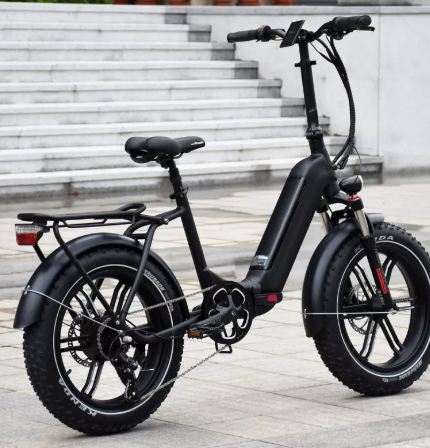
Space-saving: A foldable e-bike is easy to store in tight spaces, making it perfect for urban dwellers or people with limited storage options.
Multi-modal compatibility: These bikes can be folded and taken on public transportation, which is ideal for those who combine cycling with other modes of travel.
Security: By folding the bike and storing it indoors, riders reduce the risk of theft, which is a major concern for e-bike owners.
Stability: The smaller wheels and folding frame can affect stability, particularly when traveling at high speeds or over rough surfaces.
Comfort: The compact design may not offer the same level of comfort as regular e-bikes, especially for long-distance rides.
Long-distance capability: Regular e-bikes are ideal for long commutes, with larger batteries and motors that provide extended range and speed.
Stability: The larger wheels and robust frame design offer a more stable and comfortable ride, especially on challenging terrains.
Storage requirements: Regular e-bikes require more space for storage, which may not be practical for people with limited space.
Less portability: These bikes are not as easy to carry onto public transportation, making them less convenient for multi-modal commuting.
| Type | Pros | Cons |
|---|---|---|
| Foldable E-Bikes | - Space-saving | - Less stable, especially at high speeds. |
| - Multi-modal transport compatibility | - Not as comfortable for long rides. | |
| - Easy to store and carry | ||
| Regular E-Bikes | - Long-range and high power | - Requires more storage space. |
| - Stable and comfortable on longer rides | - Less portable. | |
| - Better for off-road or rough terrain |
To make the right decision, you need to assess the type of commute you have. Consider how long your daily ride is, whether you need to store your bike indoors, and whether you will need to combine cycling with other forms of transportation. If your commute is relatively short and you need a bike that is easy to store and transport, a foldable e-bike may be the best fit. However, if you have a longer commute or need a bike that can handle rougher terrains, a regular e-bike will be more suitable.
Foldable e-bikes are perfect for commuters who need portability, flexibility, and convenience in urban environments.
Regular e-bikes are ideal for long-distance riders who need more power, range, and stability.
Choosing between foldable and regular e-bikes ultimately depends on your commuting needs. If storage space is limited or you rely on public transportation, a foldable e-bike is the ideal choice. For long-distance commuters requiring more power and stability, regular e-bikes are better suited.Selecting the right e-bike can significantly enhance your commuting experience. Whether you prioritize portability, power, or comfort, choosing the right model is key to an efficient and enjoyable daily ride.
Zhejiang Eshion Technology Co.,Ltd offers a range of high-quality e-bikes designed for both urban commuters and long-distance riders. With their advanced features and durable construction, Eshion's e-bikes provide the perfect balance of performance and convenience.
A: A foldable e-bike is an electric bike that can be folded into a compact size, making it easy to store and carry, ideal for commuters with limited space or those who rely on public transport.
A: A regular e-bike offers more power, stability, and range compared to foldable models. It’s better suited for long-distance rides and rough terrain, while foldable e-bikes are designed for urban commuting and portability.
A: A regular e-bike is better for long commutes due to its larger battery and more powerful motor, providing greater comfort and range for extended rides.
A: Foldable e-bikes are typically designed for smooth urban commutes and may struggle on rough terrain. For off-road rides, a regular e-bike is recommended.
A: While foldable e-bikes are efficient for city commuting, they usually have smaller motors and batteries compared to regular e-bikes, which are more powerful and built for longer distances.
A: Foldable e-bikes are often more affordable due to their smaller motors and simpler designs. Regular e-bikes, with larger motors and higher capacities, tend to be more expensive.


